




Agriculture Software Development Services
DigitalMara provides custom agriculture software development services for agribusinesses and AgTech companies looking to digitize operations, connect agricultural data, and improve decision-making. We develop and modernize solutions for farm and crop management, livestock, precision agriculture, equipment monitoring, analytics, and agricultural supply chains, combining software engineering with AI, IoT, cloud, and data technologies.
Clients we work with
DigitalMara empowers different types of clients across the entire agricultural spectrum with custom software solutions.
- AgTech startups
- Farms and agricultural producers
- Animal farming businesses
- Agricultural technology companies
- Agribusiness companies
- Agricultural organizations
- Agricultural supply chain and logistics companies
- Agricultural marketplaces and platforms
- Agricultural research and data companies
- Greenhouse and controlled-environment agriculture
Types of agriculture applications we develop
Modern agriculture relies on a vast, interconnected ecosystem of physical assets, complex labor workflows, data-gathering devices, and extensive logistics. Managing these multifaceted operations requires secure, high-performing, and seamlessly integrated digital systems. At DigitalMara, we design and develop custom agricultural applications for various tasks.
Farm management software

Farm management software provides a centralized environment for planning, organizing, and monitoring farming operations. These applications help manage fields, crops, tasks, resources, employees, and production activities while maintaining detailed records throughout the farming cycle. By consolidating operational data and workflows in one system, farm management platforms improve coordination between field teams and management, provide greater visibility into ongoing activities, and support more efficient use of land, labor, equipment, and other resources.
Livestock management tools
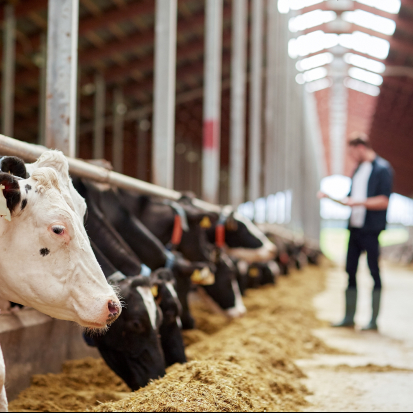
Livestock management tools help farms monitor animals and organize the processes involved in raising and managing livestock. These systems maintain records for individual animals and herds, including health, breeding, feeding, location, and production information. Integration with sensors and connected devices can provide continuous data on animal activity and conditions, helping identify health issues earlier, improve feeding and breeding practices, and maintain accurate livestock records.
Crop management software

Crop management software supports agricultural operations from planting and cultivation to harvesting. These applications provide tools for planning crops, monitoring field conditions, scheduling irrigation and other activities, and managing pests and diseases. By combining information such as crop records, weather data, soil conditions, and field observations, crop management systems help agricultural teams identify potential problems, optimize growing practices, and improve production planning and yield forecasting.
Precision agriculture solutions
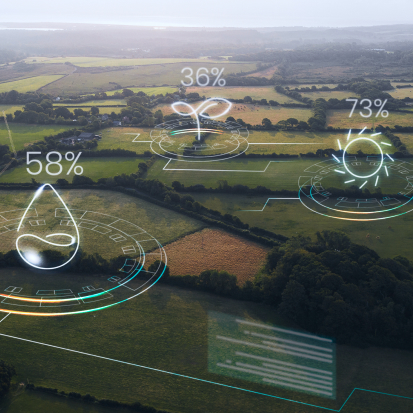
Precision agriculture solutions use geospatial data, remote sensing, connected equipment, and analytics to manage agricultural resources according to the specific conditions of different areas within a field. These systems can analyze soil and crop variability and support precise application of water, fertilizers, pesticides, and other inputs. GPS-based field management, satellite imagery, drone data, and variable-rate technologies provide more detailed information for field operations, helping reduce unnecessary resource use, improve productivity, and support more sustainable farming practices.
Agriculture data analytics
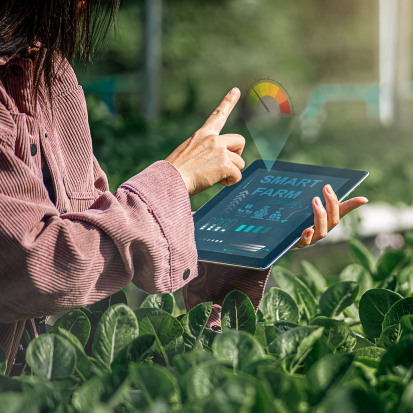
Agriculture data analytics platforms transform data from farming operations into information that can support operational and strategic decisions. They can aggregate data from farm management systems, sensors, machinery, weather services, production records, and other sources to provide a comprehensive view of agricultural performance. Dashboards, reports, predictive models, and analytical tools help businesses monitor yields, production costs, resource consumption, and operational indicators while identifying trends and potential risks across farms and production cycles.
Agricultural ERP software

Agricultural ERP software connects financial, operational, and administrative processes within a unified business environment. These systems can manage procurement, accounting, inventory, production planning, human resources, warehousing, transportation, and other core business functions while maintaining consistent data across departments. Integration between ERP and agricultural systems provides management with better visibility into costs, resources, inventory, and supply chain activities, supporting more accurate planning and coordinated business operations.
Agricultural equipment management software
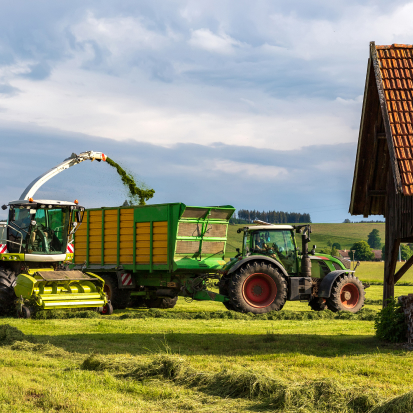
Agricultural equipment management software helps organizations manage machinery and vehicle fleets throughout their operational lifecycle. These applications track equipment location, utilization, fuel consumption, operating hours, maintenance schedules, and service history, while telematics integrations can provide real-time information from connected machinery. By monitoring equipment performance and automating maintenance planning, these systems help reduce unplanned downtime, extend asset lifecycles, improve fleet utilization, and control operating costs.
Agriculture mobile applications

Agriculture mobile applications extend farm management and field operations to smartphones and tablets, allowing workers and managers to access and update information directly from the field. Mobile solutions can support crop inspections, field data collection, task assignments, equipment monitoring, workforce coordination, and access to farm records even when users are away from office systems. Integration with central agricultural platforms, IoT devices, GPS, and analytics systems enables real-time synchronization between field activities and broader operational workflows.
Agriculture software development services
From initial roadmap design to full-cycle development, deployment, and ongoing platform enhancement, we turn complex agricultural challenges into reliable digital solutions.
-
Technology consulting
-
Agriculture software development
-
Integration and software modernization
We assist agricultural companies in making informed technology decisions. Our experts analyze current processes, audit existing IT infrastructure, and evaluate new product concepts. We help you design future-ready platform architectures, select appropriate tech stacks, and chart a clear path for digital adoption.
DigitalMara engineers tailored software solutions built to streamline farm management and elevate precision agriculture. We develop scalable web applications, real-time analytics platforms, and mobile field tools covering yield forecasting, automated irrigation, livestock management, IoT-based crop monitoring, and supply chain logistics.
We connect disparate farm systems and upgrade aging legacy software to build a cohesive digital infrastructure. Our team ensures smooth data exchange between soil sensors, heavy machinery telemetry, ERP systems, and external weather services, helping you centralize field data and upgrade legacy software without disrupting daily operations.
-
Technology consulting
We assist agricultural companies in making informed technology decisions. Our experts analyze current processes, audit existing IT infrastructure, and evaluate new product concepts. We help you design future-ready platform architectures, select appropriate tech stacks, and chart a clear path for digital adoption.
-
Agriculture software development
DigitalMara engineers tailored software solutions built to streamline farm management and elevate precision agriculture. We develop scalable web applications, real-time analytics platforms, and mobile field tools covering yield forecasting, automated irrigation, livestock management, IoT-based crop monitoring, and supply chain logistics.
-
Integration and software modernization
We connect disparate farm systems and upgrade aging legacy software to build a cohesive digital infrastructure. Our team ensures smooth data exchange between soil sensors, heavy machinery telemetry, ERP systems, and external weather services, helping you centralize field data and upgrade legacy software without disrupting daily operations.
Intelligent solutions for agriculture
Navigating the modern agricultural landscape requires moving beyond traditional practices toward data-driven, technology-first operations. Integrating next-generation software tools allows agribusinesses to optimize resource usage, mitigate risks, and boost farm yield.
-
AI and Machine Learning solutions
-
IoT and monitoring systems
-
Business Intelligence and Big Data
AI and Machine learning can help agricultural businesses analyze complex datasets and identify patterns that are difficult to detect manually. Computer vision can be used for crop and plant health assessment, disease and pest detection, while predictive models can support yield forecasting, irrigation planning, livestock monitoring, and equipment maintenance. By combining historical records with current operational data, AI-based solutions can help optimize agricultural processes and support more accurate planning.
IoT connects agricultural equipment, sensors, and other devices to collect real-time information from fields and production environments. Sensors can monitor soil moisture, temperature, humidity, weather conditions, crop conditions, livestock, and equipment performance. Connected monitoring systems provide centralized access to this data and can trigger alerts or automated actions, helping teams respond to changing conditions and manage resources more efficiently.
Agricultural operations generate data across many areas, including crop production, weather, equipment, inventory, logistics, and financial performance. Business Intelligence and Big Data technologies bring this information together for analysis, reporting, and forecasting. Interactive dashboards and analytical models provide a clearer view of operational performance, help identify trends and inefficiencies, and support planning based on data from multiple sources.
-
AI and Machine Learning solutions
AI and Machine learning can help agricultural businesses analyze complex datasets and identify patterns that are difficult to detect manually. Computer vision can be used for crop and plant health assessment, disease and pest detection, while predictive models can support yield forecasting, irrigation planning, livestock monitoring, and equipment maintenance. By combining historical records with current operational data, AI-based solutions can help optimize agricultural processes and support more accurate planning.
-
IoT and monitoring systems
IoT connects agricultural equipment, sensors, and other devices to collect real-time information from fields and production environments. Sensors can monitor soil moisture, temperature, humidity, weather conditions, crop conditions, livestock, and equipment performance. Connected monitoring systems provide centralized access to this data and can trigger alerts or automated actions, helping teams respond to changing conditions and manage resources more efficiently.
-
Business Intelligence and Big Data
Agricultural operations generate data across many areas, including crop production, weather, equipment, inventory, logistics, and financial performance. Business Intelligence and Big Data technologies bring this information together for analysis, reporting, and forecasting. Interactive dashboards and analytical models provide a clearer view of operational performance, help identify trends and inefficiencies, and support planning based on data from multiple sources.
Technologies we use












Why develop custom agriculture software?
Automation
Custom agriculture software can automate repetitive and time-consuming activities such as data collection, task assignment, reporting, inventory updates, irrigation scheduling, and maintenance notifications. Automating routine workflows reduces manual work, minimizes data entry errors, and allows agricultural teams to focus on higher-value operational activities.
Visibility
A custom solution can bring information from fields, machinery, sensors, production systems, and business applications into a centralized environment. Real-time dashboards and monitoring tools give managers a clearer view of field conditions, equipment status, resource consumption, production activities, and other operational indicators across multiple locations.
Data-driven decisions
Agricultural operations generate large amounts of data that can support more informed planning and resource management. Custom software can consolidate historical and real-time information and apply analytics, forecasting, and AI models to help identify trends, evaluate performance, forecast yields, and support decisions related to crops, livestock, equipment, and resources.
Integration
Custom software can connect specialized agricultural applications with existing ERP, CRM, accounting, logistics, IoT, GIS, and other enterprise systems. API integrations and data synchronization create a consistent flow of information between different platforms, reducing isolated data and helping teams work with up-to-date information across operational and business processes.
Scalability
Agricultural businesses may expand to new fields, farms, regions, crops, facilities, or production volumes over time. Custom software can be designed with an architecture that supports this growth, allowing new users, locations, data sources, devices, and functionality to be added without replacing the entire solution.
Operational efficiency
By connecting workflows, automating routine processes, and providing timely access to operational data, custom agriculture software can help businesses use labor, equipment, materials, water, and other resources more effectively. Better coordination and process visibility can also help identify bottlenecks, reduce unnecessary activities, and improve overall operational planning.